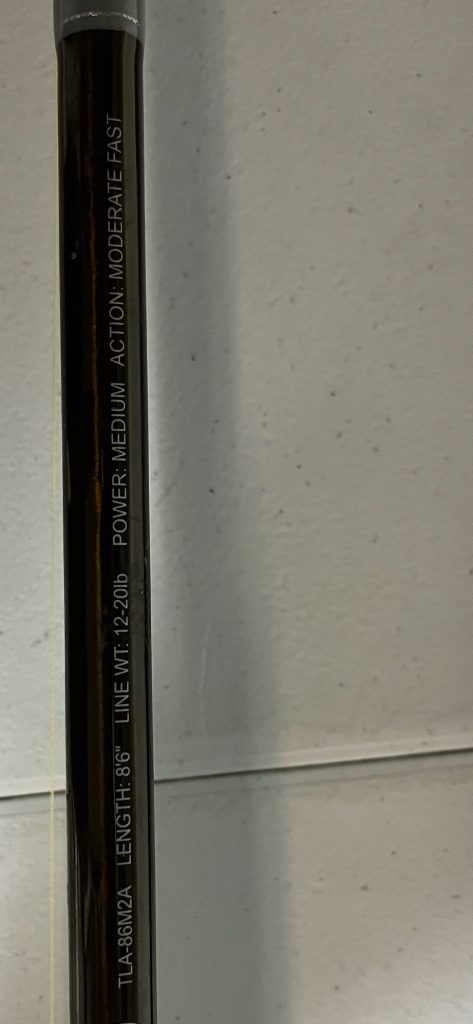
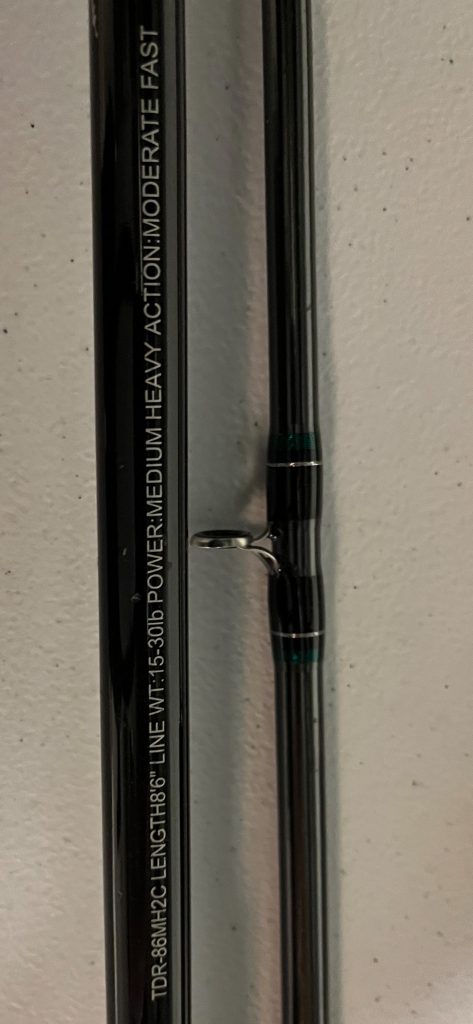
For rods: my preference is the Shimano Talora. Either Medium or Medium heavy. 8ft.6in. length. Moderate fast action. I often use incremental Shimano rods up to 10ft. to get a better spread.
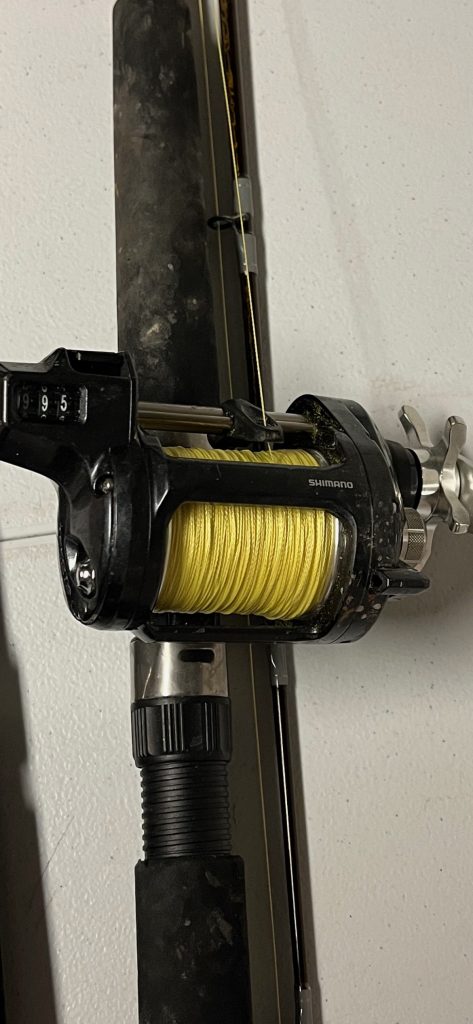
For reels: I like the Shimano Tekota 600HG LC reels. I prefer a low profile reel with a line counter. Has an exceptionally smooth 24# drag. The 6.3:1 gear ratio gives a 38 inch per crank line retrieve. 330 ft of 65 braid line capacity
LINE:
LEADER:
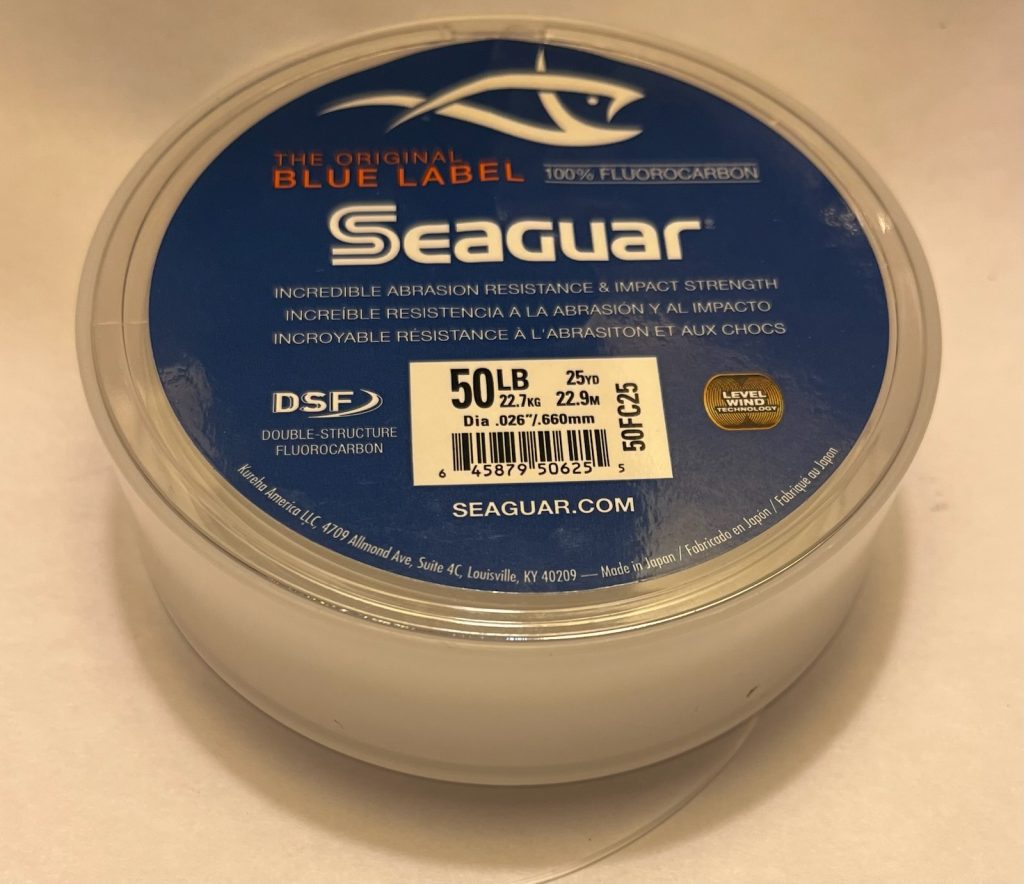
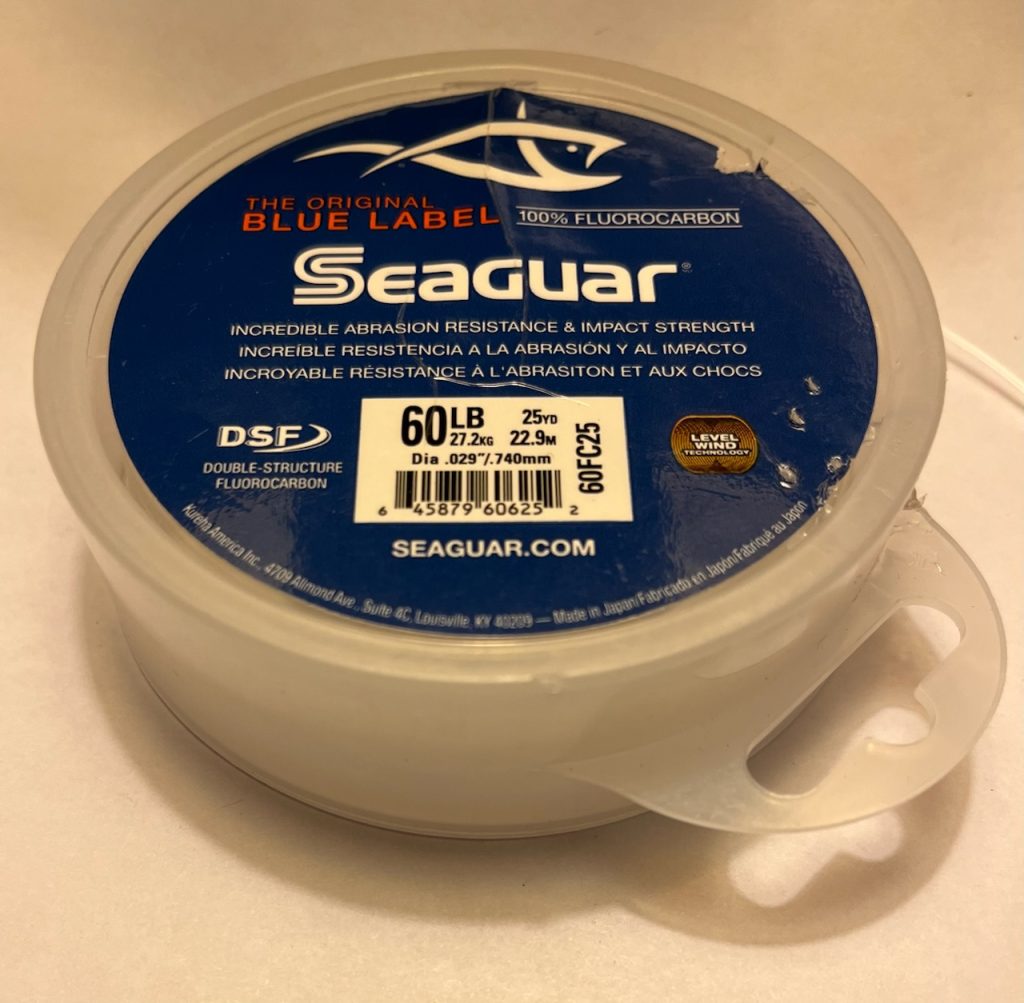
I use either a 50# test or 60# test Seaguar flurocarbon. The 50# test is less stiff and provides a bit more flexibility with knot and loop tying.
MAIN LINE:
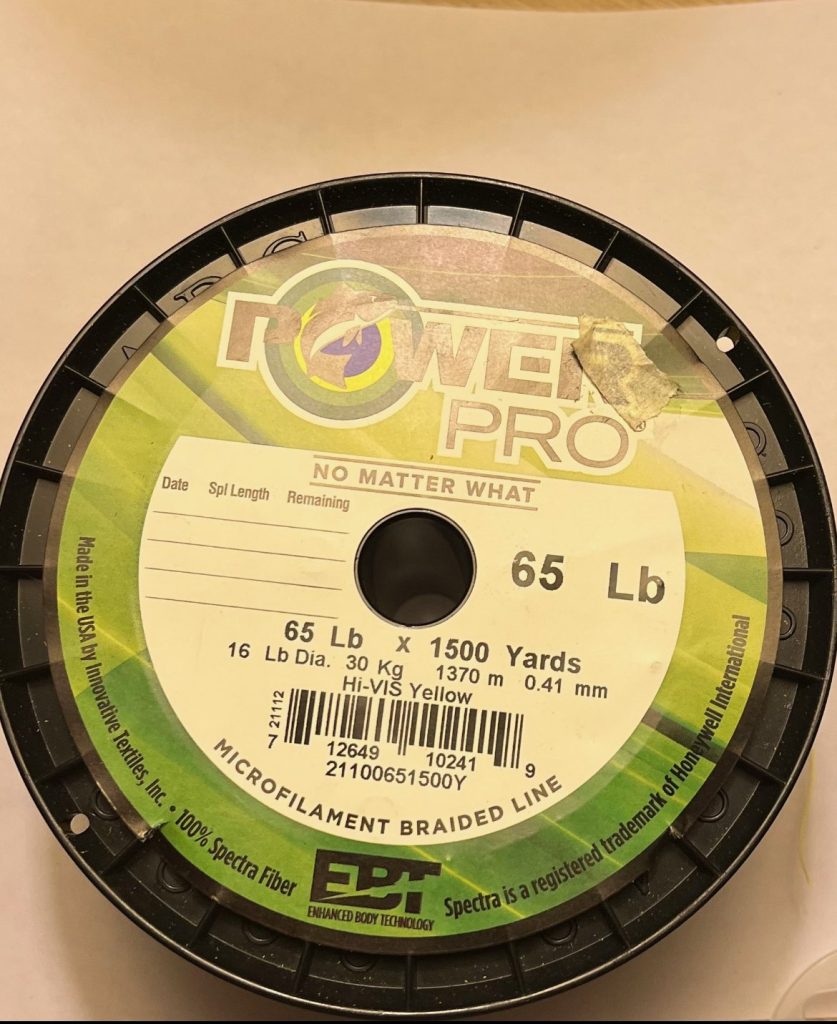
I use 65# test Power Pro HI-VIS Yellow.
SINKERS:
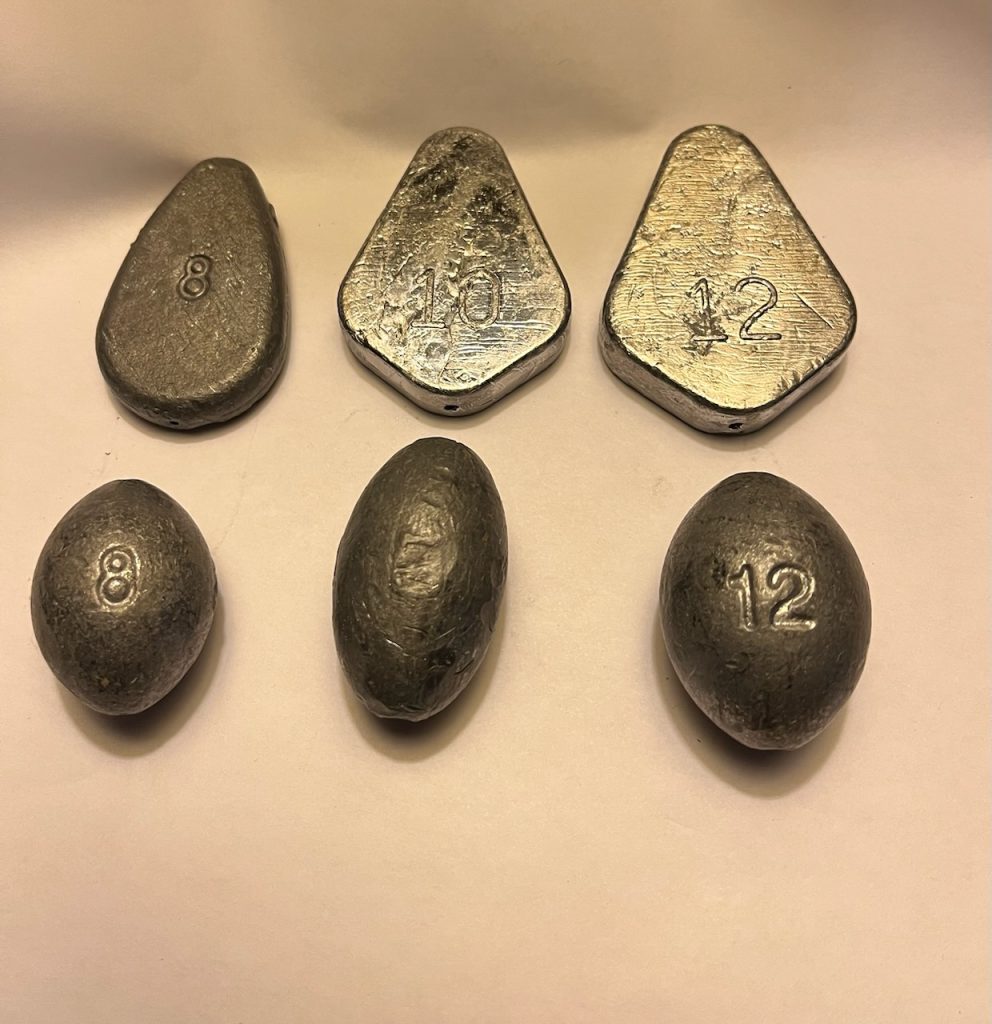
I prefer in-line sinkers. There seems to be less twisting of line during casting. I use no-roll sinkers as first choice and barrel/egg sinkers as second choice.
Maintaining a smooth opening and tunnel important to avoid line abrasion. Small bore file works wonders.
Some, in-line sinkers are constructed with plastic liners to avoid line abrasion.
Incidentally, there has not been an apparent failure or wear problem on the main line 65# braid with the in-line sinkers.`
The in-line sinkers should also be checked for debris or sand packing in the tunnel during fishing sessions to assure proper functioning.
TERMINAL TACKLE CONSTRUCTION:
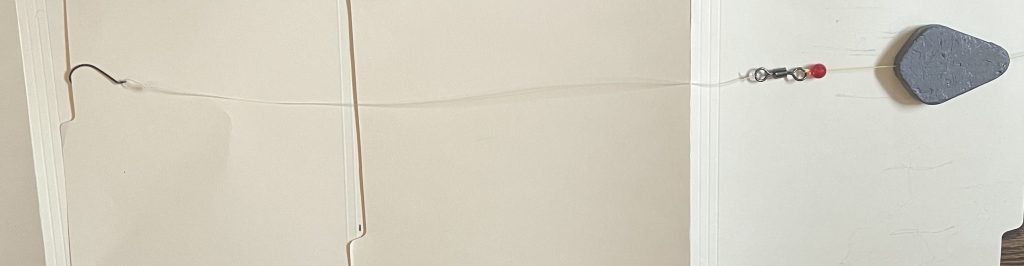
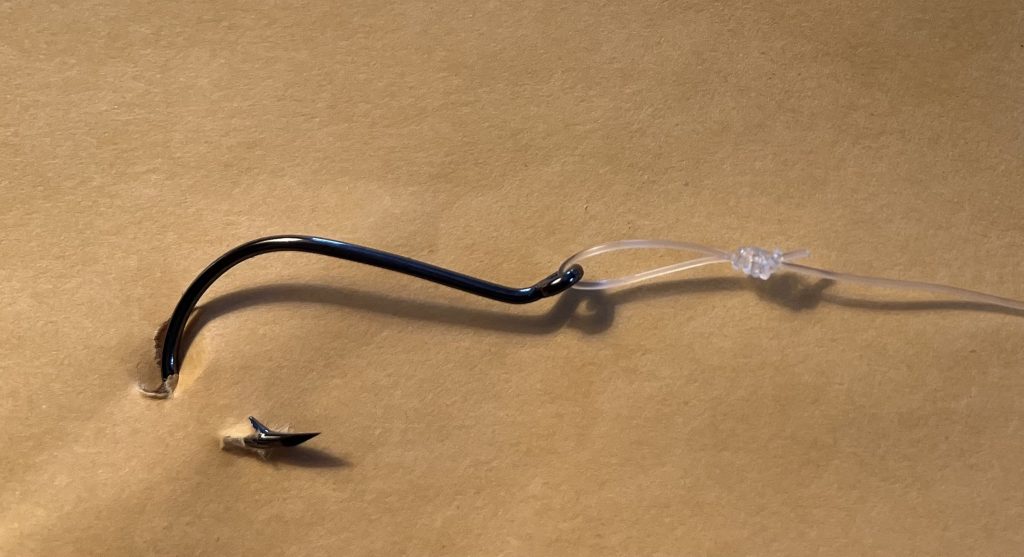
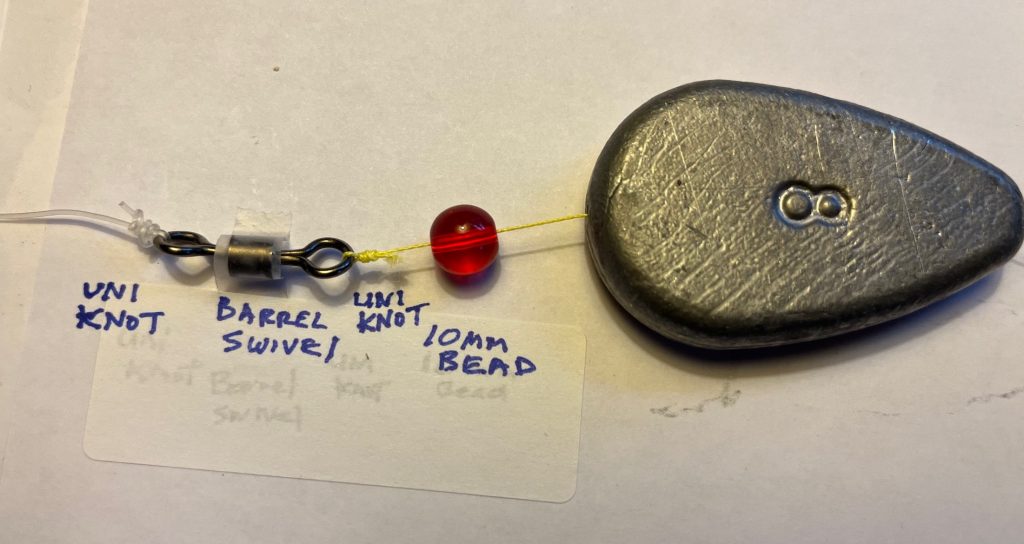
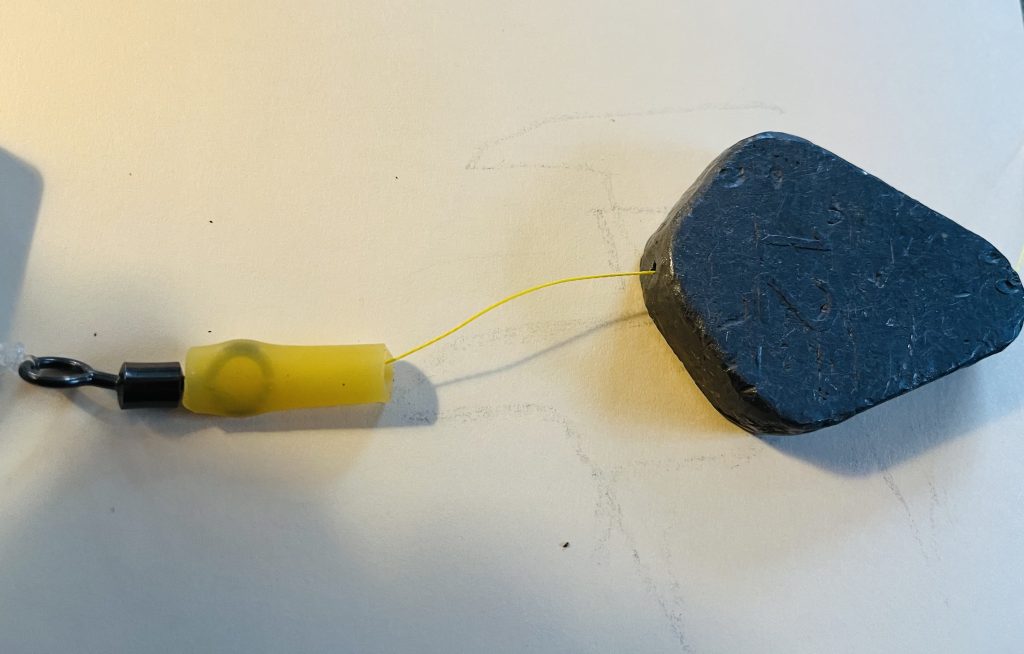
I like short leaders. The flourocarbon leader length is 16-19 inches. This is attached to a barrel swivel by a uni knot. The in-line sinker is placed on the main line followed by a 10mm bead. The bead protects the knot. Surgical tubing is alternative to bead if concerned about line fray by beads. The main line is attached to the barrel swivel by a uni knot. A 4/0 or 5/0 hook is attached to the leader by a Figure of Eight Loop Knot. Octopus J or Circle hooks are angler preference. I’ve used both type hooks successfully . There are less foul hook -ups with Circle hooks.The bead protects the knot from the sinker. The loop at he hook-end allows the bait more freedom of movement during the suction/vacuum sturgeon bite
Basic terminal rig construct
Figure Eight Loop Knot
I currently use a Figure Eight Loop Knot for the hook because of excellent strength and easier to control loop size. The following video shows nice explanation of how to tie the Figure Eight loop Knot.(edited You Tube video from; https://www.intheriffle.com/in-the-riffle-blog/figure-eight-loop knot#:~:text=The%20Figure%20Eight%20Tarpon%20Loop,mono%20and%20will%20not%20slip).
Surgical tubing as alternative to bead. Picked this up from White Sturgeon Guide, Yves Bisson, in British Columbia. The thought being that due to fraying the beads don’t protect the knot and can also fray the line. It’s suggested the bead edge can be tested by running some line through the bead and checking for line fraying. If fraying exists, switch to another bead until a clean pass of line occurs.
ROD HOLDERS:
My preference is quick release rod holders . I use the Scotty R-5 and Orca rod holders with extensions . This eliminates the loss of time to control the butt-end of the rod with the awkward movement of bringing the rod away from the angler and out of a solid tubular rod holder. The ability to retain complete control of the butt-end of the rod maintains immediate pressure on the the fish avoiding a large hot fish pulling the rod out of the angler’s hands. For the aft positioned actively baited rods I prefer the R-5 rod holders. I prefer using empty Orca rod holders in the fore positions to place any additional actively baited rods that are not in use once a fish is hooked and actively being fought on another rod. The Orca rod holders secure the rods extremely well when not in use.